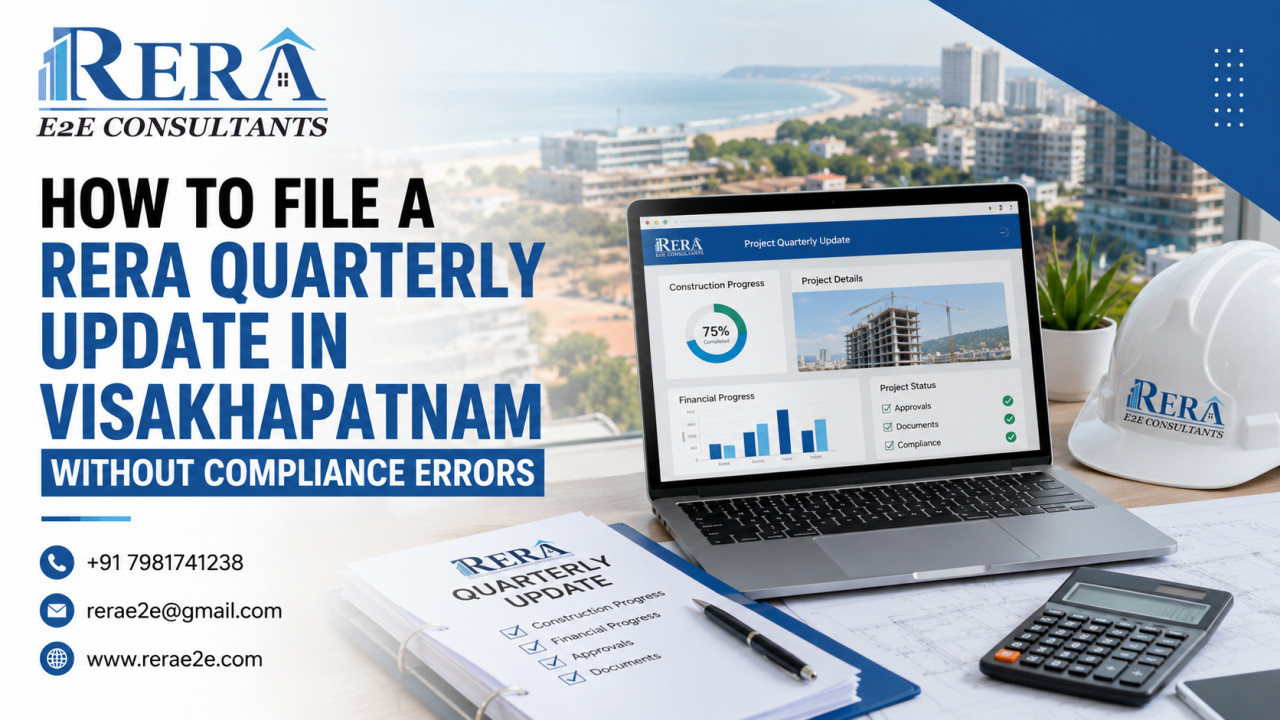
The real estate sector is governed by strict compliance requirements, and one of the most important responsibilities for every registered promoter is submitting quarterly project updates under RERA. Missing deadlines, providing inaccurate information, or uploading incomplete documents can lead to regulatory scrutiny, penalties, and loss of buyer confidence.
For developers handling multiple projects, preparing the RERA quarterly update Visakhapatnam accurately requires careful planning, organized documentation, and a clear understanding of reporting requirements. Every detail submitted on the RERA portal reflects the project's progress and transparency, making compliance an essential part of project management rather than a routine administrative task.
At RERA E2E Consultants, we assist developers, builders, and promoters in maintaining complete RERA compliance by managing quarterly updates with accuracy and efficiency.
What Is a RERA Quarterly Update?
A RERA quarterly update is a mandatory compliance requirement that registered real estate promoters must submit periodically through the respective State RERA portal. The purpose is to keep homebuyers and regulatory authorities informed about the actual progress of registered projects.
These updates generally include:
- Physical construction progress
- Financial progress
- Number of units sold
- Inventory availability
- Project approvals
- Construction photographs
- Status of approvals and permissions
- Changes in project information, if applicable
The information becomes publicly available, allowing buyers to monitor the project's development.
Why Is the RERA Quarterly Update Important?
Quarterly reporting creates transparency between developers and buyers. It demonstrates that the promoter is meeting statutory obligations while providing accurate project information.
Benefits include:
- Builds buyer confidence
- Reduces legal complications
- Improves project credibility
- Maintains regulatory compliance
- Avoids unnecessary notices from authorities
- Enhances developer reputation
Consistent compliance also supports smoother project execution without regulatory interruptions.
Who Needs to File the Quarterly Update?
Every registered real estate project under Andhra Pradesh RERA generally requires periodic project updates unless exempted under applicable regulations.
The responsibility lies with:
- Real estate developers
- Builders
- Promoters
- Joint development entities
- Authorized project representatives
Whether the project is residential, commercial, or mixed-use, compliance obligations remain equally important.
Information Required Before Filing
Before beginning the RERA quarterly update Visakhapatnam, collect all relevant project information.
1. Construction Progress
Provide accurate updates regarding:
- Foundation work
- Structural completion
- Floor-wise construction
- Roofing
- Finishing work
- External development
- Infrastructure development
Avoid estimating progress without supporting records.
2. Project Photographs
Recent photographs should clearly represent the current construction stage.
Include:
- Site overview
- Tower progress
- Amenities
- External infrastructure
- Internal work
Images should match the reported construction status.
3. Financial Progress
Developers may need updated financial details including:
- Amount collected
- Funds utilized
- Construction expenditure
- Remaining work
Financial reporting should remain consistent with project records.
4. Sales Information
Keep updated records of:
- Units booked
- Units available
- Unsold inventory
- Cancelled bookings
Incorrect sales reporting often results in compliance discrepancies.
5. Project Approvals
Verify the status of:
- Building permissions
- Environmental clearances
- Fire approvals
- Occupancy permissions
- Utility approvals
Only valid and updated approvals should be reported.
Step-by-Step Filing Process
Preparing the RERA quarterly update Visakhapatnam becomes much easier with a systematic approach.
Step 1: Review Previous Quarterly Submission
Compare the previous submission with current project progress.
Check for:
- Pending corrections
- Project milestones
- Updated approvals
- Previous declarations
Consistency between reports is essential.
Step 2: Collect Updated Project Records
Gather information from every department involved.
Coordinate with:
- Project managers
- Engineers
- Finance teams
- Sales teams
- Legal department
Centralized documentation minimizes reporting errors.
Step 3: Verify Construction Status
Physical progress should match actual site conditions.
Cross-check:
- Percentage completed
- Construction schedule
- Photographic evidence
- Engineer reports
Never rely solely on estimated completion percentages.
Step 4: Update Financial Information
Ensure financial figures correspond with accounting records.
Review:
- Project accounts
- Escrow transactions
- Construction expenditure
- Customer collections
Even minor discrepancies may invite clarification from authorities.
Step 5: Upload Supporting Documents
Ensure every required document is:
- Updated
- Legible
- Correctly named
- Properly formatted
Uploading outdated approvals is a common compliance mistake.
Step 6: Perform Internal Verification
Before final submission:
- Check spelling
- Verify numerical entries
- Confirm document uploads
- Review photographs
- Validate dates
A second review significantly reduces filing mistakes.
Step 7: Submit Before the Deadline
Avoid waiting until the final day.
Early submission provides sufficient time to address:
- Technical issues
- Document corrections
- Portal errors
- Missing information
Timely filing demonstrates strong compliance practices.
Common Compliance Errors to Avoid
Many developers receive notices because of preventable mistakes.
Incorrect Construction Percentage
Reporting inflated construction progress creates inconsistencies when authorities inspect the project.
Always report actual site progress.
Uploading Old Photographs
Quarterly updates require current project photographs.
Using older images may result in questions regarding project transparency.
Mismatch Between Sales and Inventory
Inventory details should always align with booking records.
Maintain updated sales registers throughout the quarter.
Missing Supporting Documents
Expired approvals or incomplete documents delay compliance.
Create a checklist before submission.
Financial Inconsistencies
The reported financial information should correspond with:
- Escrow account records
- Chartered Accountant reports
- Internal accounting data
Consistency builds regulatory confidence.
Typographical Errors
Simple typing mistakes can affect:
- Project dates
- Unit numbers
- Financial values
- Approval references
Proofreading remains essential.
Best Practices for Error-Free Compliance
Professional compliance management involves more than filing forms.
Consider implementing these practices:
Maintain Quarterly Documentation
Instead of collecting documents at the last moment, organize records throughout the quarter.
Create Department Coordination
Construction, finance, legal, and sales teams should regularly exchange project updates.
Keep Digital Records
Maintain properly categorized folders for:
- Approvals
- Financial reports
- Site photographs
- Construction reports
- Customer bookings
Digital organization speeds up filing.
Conduct Internal Compliance Audits
Quarterly internal reviews help identify:
- Missing approvals
- Documentation gaps
- Reporting inconsistencies
Preventive checks reduce compliance risks.
Assign Compliance Responsibility
Appoint dedicated personnel responsible for RERA reporting.
Clear accountability improves reporting quality.
Benefits of Professional RERA Compliance Support
Managing quarterly compliance internally can become challenging for developers handling multiple projects.
Professional consultants assist by:
- Reviewing project documentation
- Preparing compliance reports
- Verifying financial information
- Coordinating with project teams
- Reducing filing errors
- Ensuring timely submissions
Professional support minimizes administrative burden while improving reporting accuracy.
How RERA E2E Consultants Help Developers
At RERA E2E Consultants, we specialize in end-to-end RERA compliance services for builders, promoters, and developers.
Our services include:
- Quarterly update preparation
- Project registration support
- Documentation verification
- Regulatory compliance assistance
- Professional consultation
- Ongoing compliance monitoring
Our experienced professionals work closely with clients to ensure every submission is accurate, timely, and fully compliant with applicable regulations.
Why Accurate Quarterly Reporting Matters for Buyers
Homebuyers increasingly review project information available on the RERA portal before making investment decisions.
Accurate quarterly reporting allows buyers to:
- Monitor construction progress
- Verify project timelines
- Assess project transparency
- Build trust in the developer
Developers who consistently submit accurate updates strengthen their market reputation and improve customer confidence.
Preparing for Every Reporting Cycle
Successful compliance is not achieved by rushing during submission week. It is the result of maintaining organized records throughout the project lifecycle.
Developers should establish a quarterly compliance calendar that includes:
- Monthly document collection
- Construction progress reviews
- Financial reconciliation
- Approval verification
- Internal compliance meetings
- Final submission review
This structured approach significantly reduces compliance risks while improving operational efficiency.
Final Thoughts
Preparing the RERA quarterly update Visakhapatnam requires accuracy, coordination, and careful documentation. Every submission represents the project's actual status and serves as an important source of information for both regulatory authorities and homebuyers.
Developers who maintain organized records, verify information before submission, and follow structured compliance processes can significantly reduce reporting errors and avoid unnecessary regulatory complications.
Partnering with experienced professionals like RERA E2E Consultants helps simplify quarterly compliance, ensuring that every update is filed correctly, supported by accurate documentation, and submitted within the prescribed timelines. Consistent compliance not only protects your project from avoidable issues but also strengthens buyer confidence and reinforces your reputation as a transparent and responsible developer.
FAQs
1. What is a RERA quarterly update Visakhapatnam?
A RERA quarterly update Visakhapatnam is a mandatory compliance submission made by registered real estate promoters to report construction progress, financial status, sales updates, project approvals, and other required information on the Andhra Pradesh RERA portal.
2. What documents are required for a RERA quarterly update Visakhapatnam?
Developers generally need construction progress reports, recent site photographs, financial details, inventory status, sales records, statutory approvals, and other supporting project documents to complete the filing accurately.
3. What are the common mistakes while filing a RERA quarterly update Visakhapatnam?
Common errors include incorrect construction percentages, outdated photographs, incomplete documentation, financial mismatches, inaccurate inventory details, and delayed submissions. Proper verification before filing helps avoid these issues.
4. How can RERA E2E Consultants help with a RERA quarterly update Visakhapatnam?
RERA E2E Consultants assist developers with document verification, compliance review, preparation of quarterly updates, accurate reporting, timely submissions, and ongoing RERA compliance support to minimize errors and regulatory risks.